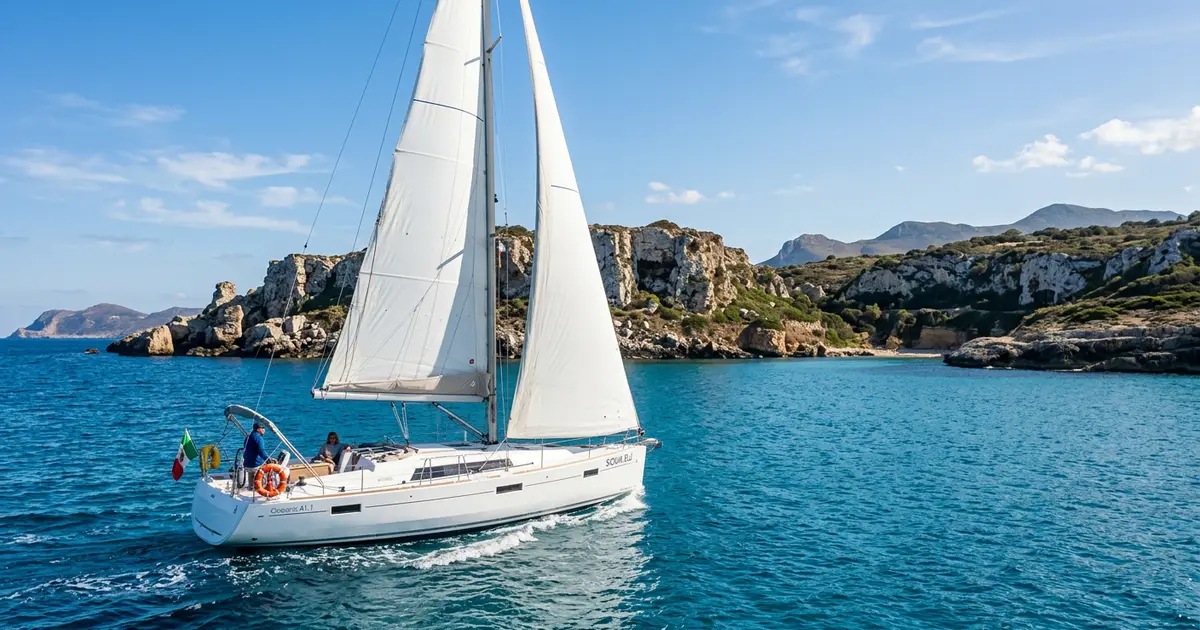
If you are worried about seasickness on a boat, the most useful preparation starts before boarding. Tell your skipper how you react to motion, discuss prevention with a pharmacist or doctor, and choose an itinerary that can change with the forecast. Around Sicily’s Egadi Islands, an autumn holiday can include short passages and sheltered stops, but neither calm water nor a particular island should be promised in advance.
The aim is not to complete a fixed circuit of Favignana, Levanzo and Marettimo. It is to find the most comfortable workable route each day, with an agreed option to postpone, shorten or abandon a crossing.
Why autumn weather matters for seasickness
Autumn can bring pleasant sailing conditions, but also unsettled spells, stronger winds and lingering swell. A sunny morning does not necessarily mean a smooth crossing: waves generated elsewhere can remain after the local wind drops. Shorter daylight also leaves less flexibility for delayed departures and long returns.
Seasickness is triggered by conflicting motion signals reaching the brain. Rolling at anchor can be as troublesome as travelling, while reading, looking at a phone or spending time below deck often makes symptoms worse. A sheltered-looking bay is therefore not automatically a comfortable overnight stop.
Ask about waves, not just wind
Before departure, ask your skipper to explain the latest official marine forecast, relevant warnings and local observations. Useful details include wind direction and gusts, wave height, wave period, swell direction and the expected trend during the return passage. Boat size, loading, heading and speed also affect how the motion feels.
There is no universal wind-speed or wave-height threshold that guarantees freedom from seasickness. Agree on a cautious comfort plan, while leaving navigation and the final safety decision to the skipper.
Choose a departure base that suits a flexible itinerary
For an Egadi-focused trip, departing from Trapani can make Favignana and Levanzo practical first options, depending on conditions. Marsala is another possible departure base, particularly when considering Favignana. The right choice depends on the actual marina, available boat and forecast—not simply the shortest line on a map.
Review the Egadi Islands sailing area with your skipper before committing to several islands. Marettimo involves a longer, more exposed passage than a near-island outing and is best treated as optional if someone aboard is especially sensitive to motion.
If your booking starts in Palermo or Portorosa, do not assume that reaching the Egadi will involve short introductory legs. Ask whether a western Sicily departure would better match your comfort priorities.
What to agree with your skipper before booking
“We would prefer a gentle trip” is less useful than describing your actual limits. Explain whether you have previously felt ill at anchor, vomited during crossings or needed to return ashore.
- Set a preferred passage duration: for example, ask whether stretches of roughly 30–60 minutes are realistic for the proposed boat and route. This is a planning preference, not a guaranteed crossing time.
- Request a gentle first outing: assess your response before committing to a longer passage or overnight stay.
- Keep destinations optional: agree that visiting fewer islands is an acceptable outcome.
- Discuss overnight comfort: a suitable harbour berth may be preferable to an anchorage affected by swell, subject to availability and conditions.
- Clarify the fallback: ask what happens if the comfortable route disappears, including postponement, a shorter outing or staying ashore.
- Check booking terms: weather-related changes, cancellations and berth arrangements should be understood before payment.
A useful message is: “One passenger is prone to seasickness. We prefer short passages, minimal time in exposed water and sheltered overnight stops. Please suggest a flexible route and explain when you would recommend staying in port.”
Build an itinerary around conditions, not island checklists
Start with the most comfortable feasible leg
On departure day, the skipper should select the first destination according to wind, swell, harbour access and the expected return conditions. Favignana or Levanzo may suit an introductory outing, but neither is always the gentler choice. Ask for the expected time underway rather than relying on distance alone.
Choose shelter for the actual wind and swell
A coast protected from one wind direction may become exposed when the wind shifts. Swell can also wrap around headlands or enter apparently protected bays. Avoid treating any named cove as an all-weather solution. The skipper must assess the approach, holding conditions, manoeuvring room and a safe exit.
The Egadi Islands are a marine protected area. Navigation, anchoring and mooring can be restricted according to zone and current rules. Confirm applicable permissions and seasonal mooring availability before relying on a stop; do not assume summer services remain available throughout autumn.
Protect the return window
If conditions are expected to deteriorate, an earlier return may be more sensible than adding another island. Check the next day’s outlook before deciding to stay overnight. A comfortable outward passage is not enough if the planned return would mean prolonged exposure to worsening seas.
How to prepare for seasickness before boarding
Sleep well, avoid alcohol and eat a light, familiar meal before departure. Going aboard extremely hungry or after a heavy meal can make the experience harder. Bring water, simple snacks, warm layers and waterproof clothing: being cold, tired or dehydrated adds to discomfort.
If you have a history of motion sickness, ask a pharmacist or doctor about suitable medication before the trip. Some products need to be taken before motion begins, and some cause drowsiness or have contraindications. Follow the product instructions and professional advice, especially for children, pregnancy, existing medical conditions or other medicines. Avoid combining sedating products with alcohol.
Ginger or acupressure bands help some people, but evidence is mixed and neither should replace an appropriate prevention plan. Keep any recommended medication accessible rather than buried in luggage.
What to do if symptoms start underway
- Tell the skipper early: yawning, sweating, increased saliva and mild nausea can precede vomiting.
- Look towards a stable horizon: stop reading and put your phone away.
- Stay in fresh air where safe: ask the skipper for a secure seating position with less motion, usually away from the bow.
- Follow onboard safety instructions: do not move around unassisted or lean over the side to vomit; request a suitable bag or container.
- Take small sips of water: repeated vomiting can lead to dehydration.
The skipper may be able to adjust speed, heading or destination, but only when safe. Persistent vomiting, inability to keep fluids down, fainting, confusion or unusual severe symptoms require medical advice rather than simply waiting for the next stop.
Choose flexibility over ambitious mileage
No boat type is seasickness-proof. Catamarans and monohulls move differently, and individual reactions vary. When reviewing the available charter fleet, ask about sheltered seating, easy deck access and the motion expected on your route rather than assuming that a larger boat guarantees comfort.
Contact BookingABoat with your dates, preferred departure base, group size and motion-sickness concerns. Request a tailored quote and a skipper-led itinerary with realistic alternatives for autumn weather.
FAQ: Seasickness and Autumn Egadi Trips
Is autumn always rough around the Egadi Islands?
No. Calm periods occur, but conditions vary considerably. Plan from current forecasts and local observations, not seasonal averages or sunshine alone.
Which Egadi island is best for avoiding seasickness?
No island guarantees a comfortable passage. Favignana and Levanzo can offer shorter options from western Sicily, but the best choice depends on your departure point, boat and that day’s sea conditions.
Can short passages prevent seasickness completely?
No. Symptoms can develop quickly, and rolling at anchor may also trigger them. Short legs reduce exposure time but work best alongside preparation and flexible stopovers.
Should I wait until I feel sick to take medication?
Ask a pharmacist or doctor beforehand. Many motion-sickness medicines work best when taken before departure; timing and suitability depend on the product and your health.