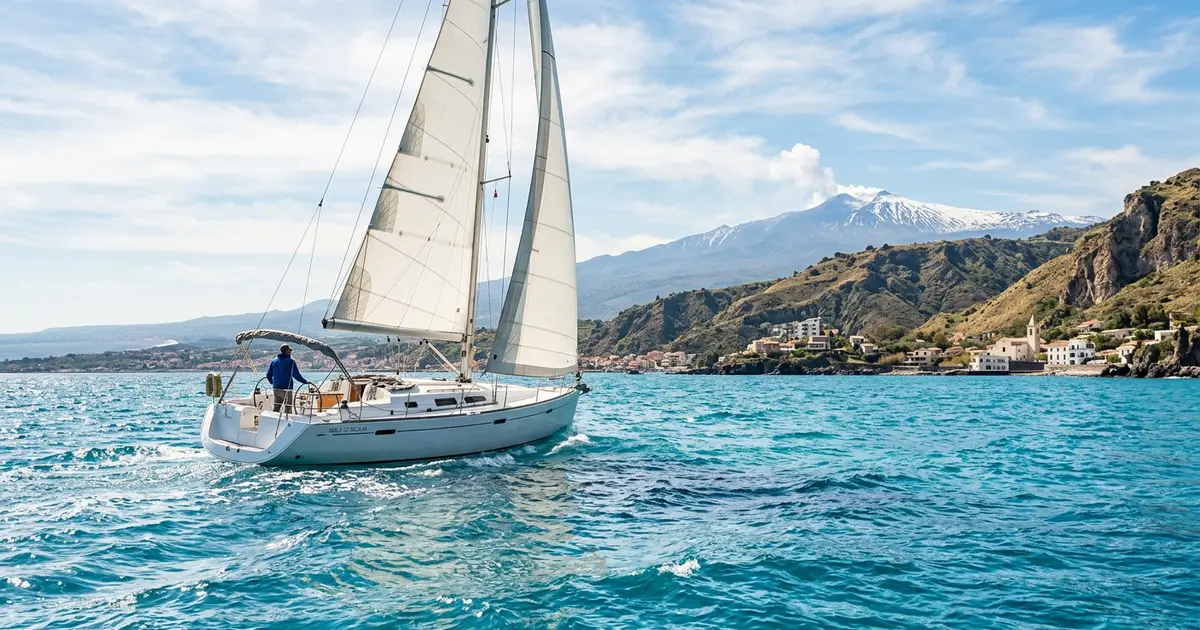
Sicily’s sailing season stretches well beyond summer, but the right month depends on whether you want warm-water swimming, quieter harbours or more time under sail. This guide to Sicily weather by month explains what to expect from January to December, including coastal air temperatures, sea temperatures and the winds that shape a boat holiday.
For most holiday crews, June and September offer the best overall balance. July and August bring the warmest water and busiest anchorages, while May and October suit flexible travellers. No month guarantees calm seas: choose your departure base and itinerary around your crew’s experience and the latest marine forecast.
Sicily’s Sailing Weather: What the Numbers Mean
The temperatures below are approximate coastal daytime highs and near-surface sea temperatures, not forecasts. Conditions vary between western Sicily, the northern coast and offshore islands. Inland and elevated locations can be substantially cooler, while heatwaves can push coastal temperatures well above these ranges.
- Air temperature: the typical daytime high, not the overnight minimum.
- Sea temperature: an indicative range; wind, currents and recent weather affect individual bays.
- Wind: seasonal tendencies help with planning, but passage decisions require current forecasts.
Sicily Weather by Month: January to December
January: Winter Sailing with Limited Daylight
Air: 14–16°C. Sea: 14–16°C. Expect changeable weather, rain and occasional strong winds. Pleasant sunny intervals are possible, but short daylight hours and passing weather systems restrict cruising options. January is better suited to experienced crews making short, forecast-led trips than to a conventional swimming holiday.
February: Cool Water and Unsettled Conditions
Air: 14–16°C. Sea: 14–15°C. The sea is near its annual minimum, and winter fronts can still bring rough conditions. Waterproof layers and warm clothing are essential underway. Keep plans local, confirm shore facilities are operating and avoid an itinerary that depends on reaching an exposed island anchorage.
March: Longer Days, Variable Weather
Air: 16–18°C. Sea: 14–16°C. Spring sunshine makes daytime sailing more appealing, but the water remains cold. Windy spells can interrupt otherwise comfortable weeks. March can work for sailing-focused trips with flexible harbour stops, although it is too early to rely on beach weather or comfortable swimming.
April: A Practical Start to Spring Cruising
Air: 18–21°C. Sea: 15–17°C. Longer days support more relaxed coastal exploration, with fewer visiting boats than in summer. Pack for cool evenings and showers. Swimming is usually brisk without thermal protection, and holiday periods can create local demand despite April being outside the main summer season.
May: Comfortable Sailing Before Peak Season
Air: 22–25°C. Sea: 18–20°C. May offers pleasant daytime conditions and generally quieter anchorages. Some visitors swim happily, while others find the water cool, particularly early in the month. It is a strong choice for combining sailing, coastal walks and time ashore without the intensity of midsummer heat.
June: One of the Best All-Round Choices
Air: 26–29°C. Sea: 21–24°C. Long daylight hours, warming water and typically drier weather make June especially attractive. Afternoon sea breezes often provide useful sailing wind, although stronger weather systems remain possible. Demand increases towards the end of the month, so arrange your preferred departure base early.
July: Hot Days and Warm-Water Holidays
Air: 29–32°C. Sea: 24–27°C. July suits swimming-led itineraries and outdoor living aboard. Plan shade, drinking water and sun protection carefully; heatwaves can exceed these typical temperatures. Popular bays become busy, and apparently settled weather does not rule out strong winds or uncomfortable seas on exposed crossings.
August: Warmest Water, Busiest Anchorages
Air: 29–32°C. Sea: 25–28°C. August usually delivers the warmest swimming conditions, alongside peak holiday demand. Around the mid-August holiday, allow extra flexibility for berths and anchoring space. Favour manageable daily distances and retain alternatives rather than assuming your preferred bay will have room or suitable shelter.
September: Warm Seas with More Breathing Space
Air: 26–29°C. Sea: 24–26°C. The sea retains summer warmth while temperatures become more comfortable. Crowds generally ease as the month progresses. September is excellent for mixed sailing and swimming holidays, but autumn weather systems and thunderstorms become more relevant, particularly later in the month.
October: A Flexible Late-Season Option
Air: 22–25°C. Sea: 21–24°C. Swimming can remain enjoyable, especially early in October, but rain and unsettled spells become more likely. Shorter days reduce the margin for lengthy passages. Check marina and restaurant opening arrangements, and choose a route with several practical harbour alternatives.
November: Mild Ashore, More Demanding Offshore
Air: 18–21°C. Sea: 18–21°C. The water cools slowly, but mild temperatures should not be confused with easy sailing. Autumn depressions can generate strong winds and swell. November suits short trips during settled weather windows rather than a fixed island-hopping schedule with little room for delay.
December: Winter Planning Takes Priority
Air: 15–17°C. Sea: 16–18°C. Short days, cooler evenings and unsettled weather make December a specialist choice. Confirm charter availability and shore services before committing. Plan around sheltered harbours, suitable clothing and conservative distances, with enough flexibility to remain in port when conditions deteriorate.
Which Winds Matter When Sailing in Sicily?
- Mistral: a northwesterly wind that can bring strong conditions and rough seas, particularly on exposed western and northern routes.
- Sirocco: a southeasterly wind bringing warm air, sometimes dust, and potentially uncomfortable seas along exposed coasts.
- Tramontane and Grecale: northerly and northeasterly winds that can make northern and eastern exposures unsuitable.
- Summer sea breezes: often develop during the day, but their strength and timing vary with local terrain and the wider weather pattern.
Check wind direction, gusts, wave height, swell and thunderstorms—not just a sunshine symbol. Headlands and island channels can accelerate wind, and residual swell can persist after it eases. Review official marine forecasts and local harbour guidance before departure and each day underway.
Match Your Departure Base to the Season
Trapani and Marsala are practical starting points for the Egadi Islands, with comparatively short access passages, although channels and exposed anchorages still require careful assessment. Portorosa is well placed for the Aeolian Islands, where passage lengths vary with your chosen circuit.
Palermo works well for northern coastal cruising and appropriately planned passages towards Ustica. Lampedusa requires separate, longer-passage planning from these Sicilian bases; it is not a casual addition to a short northern or western itinerary.
Compare general boat types in the charter fleet, then request availability and a tailored quote. Include your dates, crew experience and swimming priorities so the route and boat can be matched to the season.
Frequently Asked Questions
What is the best month for a sailing holiday in Sicily?
June and September are strong all-round choices. June has longer daylight hours; September usually has warmer water. July and August suit travellers who prioritise summer heat and swimming over quieter anchorages.
When is Sicily’s sea warm enough for swimming?
Most holidaymakers find June to October comfortable, with the warmest water usually in August. May swimming is possible but cooler. Personal tolerance, wind and time spent in the water matter as much as temperature.
Is summer always calm enough for beginners?
No. Strong winds and rough seas can occur in any month. Less experienced crews should favour shorter routes, accessible harbours and, where appropriate, a professional skipper rather than relying on seasonal averages.
Can you charter a boat in Sicily in winter?
Winter trips may be possible, subject to boat availability and conditions. Expect reduced seasonal services and a greater need for weather flexibility. Confirm arrangements directly and avoid fixed commitments requiring a crossing on a particular day.