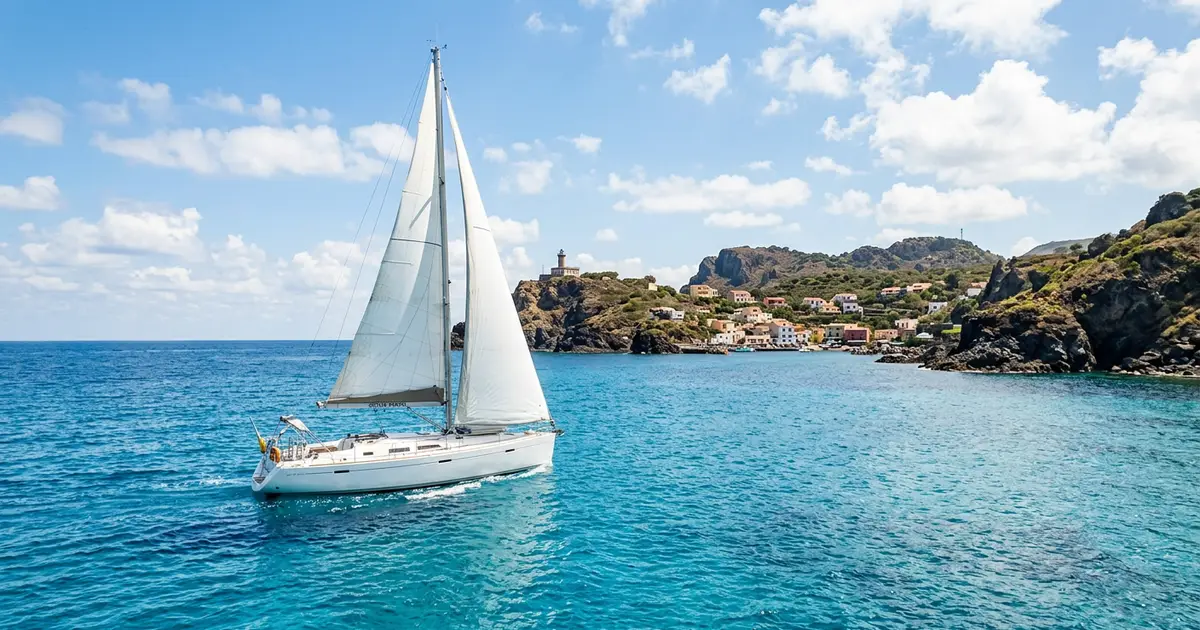
Exploring Ustica by boat means clear water, volcanic cliffs and a compact island with exceptional underwater scenery. But a successful visit starts with practical planning: where you can berth, which marine protected area rules apply, and whether the forecast supports both your arrival and your return. This guide explains what to see and where to moor without treating a harbour berth or a sheltered anchorage as guaranteed.
Getting to Ustica by boat from Palermo
Palermo is the most practical of BookingABoat’s departure bases for a direct trip to Ustica. The crossing is approximately 35–40 nautical miles, depending on your departure marina and route. At an average speed of 5–6 knots, allow roughly 6–8 hours, potentially longer with adverse conditions. Calculate your passage using the actual boat, forecast and departure point.
This is an open-water passage rather than a coastal hop. Wind, swell and visibility matter even when the weather looks pleasant ashore. A same-day return by sailing boat leaves little time to explore and can become tiring; an overnight stay or a short multi-day itinerary generally makes more sense.
Start with the Palermo departure guide, then confirm the boat’s permitted cruising area, safety equipment and charter conditions. For an overnight visit, establish a workable berthing plan before leaving the mainland.
Where to moor in Ustica
Cala Santa Maria: the main harbour
Cala Santa Maria, beside Ustica’s main settlement, is the principal arrival point and the first place to enquire about a visitor berth. Its location makes it convenient for going ashore, finding restaurants and reaching the village. However, it is a working harbour with ferry and hydrofoil movements, not a marina where visiting yachts should assume space is always available.
Contact the harbour authority or the relevant berth operator before your crossing. Give your boat’s length, beam, draught and expected arrival time, and ask where to report before entering. Confirm the assigned berth, approach instructions and any services you need. Water, electricity, fuel and waste disposal should all be checked rather than assumed.
- Keep the harbour entrance and commercial vessel manoeuvring areas clear.
- Prepare lines and fenders before entering, while remaining safely outside traffic routes.
- Do not use an empty quay or pick up an unattended mooring without permission.
- Ask whether your berth remains suitable for the forecast wind and swell.
Cala del Cimitero: an alternative to verify locally
Cala del Cimitero is another coastal landing area you may encounter when researching Ustica mooring options. It should not be treated as a guaranteed alternative yacht harbour. Whether any landing or mooring arrangement is usable depends on local permissions, available space, your vessel and the conditions on the day.
Seek explicit local advice before planning to use it. A small-boat landing place does not automatically offer suitable depths, secure overnight accommodation or protection for a visiting sailing yacht.
Anchoring and mooring buoys around the island
Ustica is surrounded by a marine protected area, so an attractive bay is not automatically a legal anchorage. Navigation, anchoring and buoy use depend on the protection zone and the current regulations. Where visitor buoys are available and authorised, check their operating status, vessel limits and booking or payment arrangements before relying on them.
Never assume that a buoy is public or suitable for your boat’s displacement. If anchoring is permitted in a particular location, choose an allowed seabed area, avoid seagrass and leave enough swinging room. A daytime swimming stop should not automatically become your overnight plan.
What to see around Ustica’s coastline
Volcanic cliffs and sea caves
The coastline is the main attraction: dark lava formations, rocky inlets and striking changes in water colour. Grotta Azzurra and Grotta Verde are among Ustica’s best-known sea caves, but seeing a cave from the water is different from entering it safely or legally.
Keep a conservative distance from the rock face and watch for reflected swell, swimmers and excursion boats. Do not take a charter yacht into a cave. For closer exploration, ask a local authorised operator what is permitted and suitable for the day’s conditions.
Cala Sidoti and the western coast
Cala Sidoti is a well-known place to experience Ustica’s rocky shore and clear water. However, shore access or permitted swimming does not imply that a yacht can approach, anchor or launch a tender there. Protected-area restrictions are particularly important when planning stops along the western coastline.
Treat this stretch as a route to research against the current zoning map, not as a list of unrestricted anchorages. Where boat access is prohibited, visit from land using designated access points and follow the rules for bathing.
Snorkelling, diving and time ashore
Ustica is particularly rewarding beneath the surface. Arrange diving through a local authorised centre that can select appropriate sites and explain access requirements. For snorkelling, choose permitted areas with calm conditions, good visibility and safe separation from boat traffic.
Leave time for the village above Cala Santa Maria, too. A walk through its streets and a meal ashore provide a welcome break after the crossing. Our Ustica destination guide offers further inspiration for building your stay around both sea and land.
Marine protected area rules: check before departure
The Ustica Marine Protected Area has zones with different restrictions. The strictest reserve areas are not open to ordinary recreational boating, while other areas may allow activities subject to conditions or authorisation. Do not rely solely on an old cruising guide, a chartplotter symbol or another boat’s behaviour.
- Obtain the current official zoning map and regulations from the marine protected area authority.
- Check applicable harbour notices and temporary navigation restrictions.
- Confirm whether your planned navigation, anchoring, tender use or underwater activity requires permission.
- Keep waste aboard and follow applicable discharge rules.
Requirements and seasonal arrangements can change. Confirm them close to departure with the protected-area office and harbour authority; this guide is not a live berth-availability or navigation notice service.
A practical short itinerary
For a relaxed visit, consider three days rather than a rushed overnight return. On day one, cross from Palermo with a suitable weather window and arrive with daylight to spare. On day two, explore authorised coastal areas, book a guided underwater activity or spend time ashore. Return on day three if conditions remain suitable.
Keep that schedule flexible. If no suitable berth is confirmed or the return forecast deteriorates, revise the trip before committing to the crossing. Compare the available charter boats and request a tailored quote, including skipper options and realistic contingency time.
Frequently asked questions
Can I reserve a mooring in Ustica?
Enquire directly with the relevant berth or buoy operator. Confirm availability for your dates and boat dimensions, and ask whether weather conditions could affect the arrangement.
Can I anchor anywhere around Ustica?
No. Marine protected area zoning and local restrictions apply. Check the current official rules before selecting an anchorage, even if other boats are already there.
Is Ustica suitable for a day trip from Palermo?
It can be feasible with an appropriate motorboat and favourable conditions, but fuel range and return timing need careful planning. By sailing boat, a multi-day visit is usually more practical.
Do I need a skipper to visit Ustica?
That depends on your qualifications, experience and charter requirements. A professional skipper is worth considering if you are unfamiliar with open-water passages, local harbour procedures or protected-area navigation.