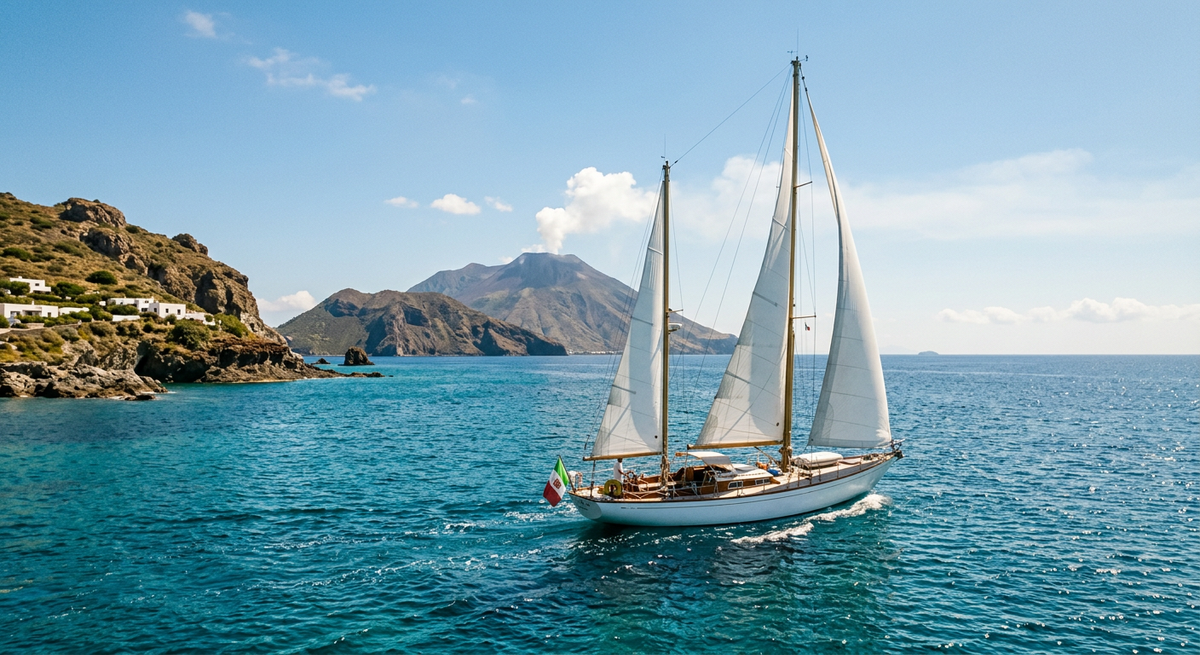
Your Aeolian Islands Boat Holiday Starts in Portorosa
An aeolian islands boat holiday combines volcanic landscapes, clear-water swimming and waterfront villages, but the best week is not a race around all seven islands. For a comfortable summer itinerary, start from Portorosa on Sicily’s north coast and concentrate on Vulcano, Lipari, Salina and Panarea, with Stromboli as an optional excursion.
This route suits a typical week-long charter with arrival on the first day, return to the base on the sixth evening and checkout on the seventh morning. Confirm your actual handover times before booking: a late departure, weather delay or different contract may require a shorter route.
Before You Set Sail
Portorosa is a practical departure point because the southern Aeolian Islands are approximately 20–25 nautical miles away, depending on your destination and route. Browse the BookingABoat fleet and request advice on a sailing yacht or catamaran suitable for your group, experience and preferred comfort level.
The distances below are approximate planning figures, not navigation instructions. At an average of five knots, 20 nautical miles takes around four hours before manoeuvring, stops or adverse conditions. Actual passages depend on wind, sea state and the exact berths or anchorages used.
If nobody in your party has suitable qualifications and experience, ask about a skippered charter. Summer demand is high, particularly in August, so organise the boat and key overnight stops well ahead.
A Practical 7-Day Aeolian Islands Itinerary
Day 1: Portorosa to Vulcano
Approximate passage: 20–25 nautical miles. Complete the boat briefing, check the inventory and safety equipment, and provision before departure. Buy drinking water, breakfast supplies and simple lunches at the base rather than relying on island shopping immediately after arrival.
If handover finishes early enough and conditions are suitable, head towards Vulcano. Its volcanic coastline makes an impressive first approach. Choose your overnight stop according to the forecast, swell and current harbour arrangements, not simply the shortest route ashore.
If check-in runs late, stay in Portorosa and cross the following morning. A rushed first passage after a travel day is rarely worthwhile.
Day 2: Vulcano to Lipari
Approximate passage: 5–10 nautical miles, excluding detours. Keep the second day relaxed. Enjoy a morning swim where permitted, then make the short crossing to Lipari. Leave time for the town, its lanes and the archaeological museum around the citadel.
Lipari is a useful place to replenish provisions and arrange an evening ashore. Berths, tenders and water supplies should be organised rather than assumed, especially during peak season. For swimming stops, select a bay sheltered from the day’s wind and wake, and check the seabed before anchoring.
Do not build the morning around a guaranteed volcano climb on Vulcano: trail access can change with volcanic conditions and local orders.
Day 3: Lipari to Salina
Approximate passage: 10–15 nautical miles. Sail towards Salina, recognised by its twin volcanic peaks and greener slopes. Santa Marina Salina is a practical shore stop, while other options depend on exposure, availability and your boat’s requirements.
Spend the afternoon exploring ashore or enjoying a sheltered swimming stop. Salina is a good island for a leisurely meal featuring capers, seafood and local produce. If you want to visit villages inland, arrange transport rather than expecting every attraction to be walkable from the waterfront.
Pollara’s scenery is spectacular, but its western exposure makes it a weather-dependent detour, not a guaranteed anchorage or overnight stop.
Day 4: Salina to Panarea
Approximate passage: 12–18 nautical miles. Leave enough time to secure suitable overnight arrangements around Panarea. Summer traffic can be intense, and mooring services, tender access and restaurant reservations deserve advance attention.
Explore the village and enjoy the island’s whitewashed lanes. Nearby rocks and islets are scenic but require careful navigation, appropriate clearance and attention to local restrictions. Never treat clear water as proof of sufficient depth.
If Stromboli is a priority, ask locally about an authorised excursion that fits your overnight arrangements. A sea-viewing trip may offer volcanic scenery without adding a long northern leg to your charter route. Departures and viewing opportunities depend on weather, volcanic activity and official restrictions; sightings are never guaranteed.
Day 5: Panarea to Lipari
Approximate passage: 12–18 nautical miles. Turn south towards Lipari rather than pushing farther north. This keeps the final return manageable and provides flexibility if tomorrow’s weather deteriorates.
Choose a different permitted swimming stop or spend more time ashore. This is also a useful opportunity to confirm the return forecast, fuel arrangements and the base’s required arrival time. If stronger winds are expected, your skipper may recommend moving closer to Portorosa today.
To include Stromboli aboard your own charter boat, redesign the week before departure. It is not a small detour, and forcing it into this itinerary reduces time ashore and weather flexibility.
Day 6: Lipari to Portorosa
Approximate passage: 22–28 nautical miles. Start early enough to allow for a slower crossing, refuelling queues and the agreed return deadline. Avoid adding a lengthy lunch stop unless you have a comfortable time margin.
Follow the base’s instructions for refuelling, approaching the berth and checking the boat back in. Spend the final night aboard if your contract includes it, with dinner ashore and luggage organised for the morning.
Day 7: Checkout and Onward Travel
Complete handover at the agreed time and leave a sensible buffer before airport transfers. This itinerary intentionally treats the final morning as checkout time, not another island-hopping day. If your charter offers different timings, ask the base how to adapt the route safely.
Summer Planning: Weather, Moorings and Costs
- Choose your month carefully: June and September often offer a less crowded experience than peak summer, although settled weather is never guaranteed. July and August bring particularly strong demand for boats and berths.
- Check forecasts daily: wind and swell can make an attractive bay uncomfortable or unsuitable. Keep an alternative overnight stop and follow harbour instructions.
- Protect the seabed: anchor only where permitted, avoiding seagrass meadows. Check current navigation limits and local notices before approaching sensitive coastal areas.
- Budget beyond the charter: allow for fuel, marina or mooring charges, provisions, transfers and any skipper, cleaning or optional services not included in your agreement.
- Prepare for summer heat: bring sun protection, refillable bottles, non-slip footwear and soft luggage. Keep drinking water readily available during passages.
For more destination inspiration, explore the Aeolian Islands. To check availability and inclusions, contact BookingABoat for a personalised quote with your dates, group size and preferred departure arrangements.
FAQ: Aeolian Islands Boat Holidays
Can you visit all seven Aeolian Islands in one week?
It is possible on some routes, but usually means longer passages and less time ashore. Alicudi and Filicudi extend the western itinerary, while Stromboli adds a northern leg. Four islands make a more relaxed first visit.
Is this itinerary suitable for families?
Yes, with suitable weather, an appropriate boat and realistic expectations. Most inter-island legs are relatively short, but the mainland crossings take several hours. Request correctly sized lifejackets and discuss children’s needs before booking.
Do you need a skipper?
Not necessarily. Bareboat eligibility depends on the boat, documentation and charter requirements. A skipper is valuable if you lack experience with Mediterranean mooring, anchoring or changing island conditions.
Can you anchor every night?
Do not assume so. Weather, local rules, seabed suitability and access ashore determine your options. Plan a flexible mix of authorised anchorages, moorings and marina berths, with charges quoted separately where applicable.